SYNTOSTAN INJECTION
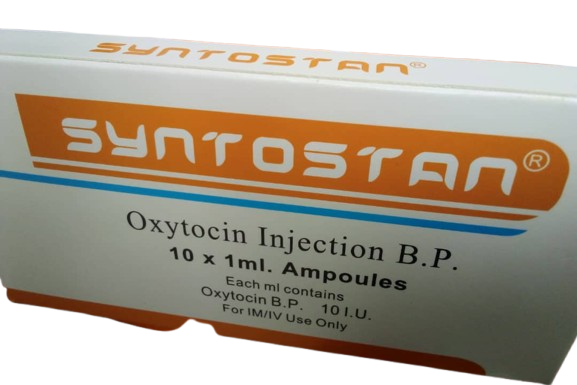
Syntostan is a synthetic oxytocin injection, packaged by Standard Generics Limited (a Nigerian pharmaceutical manufacturer) Standard Generics
Indications
- Labor induction in pregnant women when natural labor does not start.
- Augmentation of labor if contractions are insufficient to progress.
- Management of postpartum hemorrhage (bleeding after childbirth).
- Also used to stimulate contractions in cases of incomplete abortion or miscarriage Standard Generics.
Mechanism of Action
Oxytocin works by acting on the smooth muscle of the uterus, provoking rhythmic contractions, increasing contraction frequency, and enhancing uterine tone — particularly effective in late pregnancy and during delivery Standard Generics.
Safety: Contraindications & Warnings
Syntostan (oxytocin) is not appropriate in cases such as:
- Cephalopelvic disproportion (when the baby’s size doesn’t fit the mother’s pelvis).
- Abnormal fetal presentation, excess amniotic fluid, uterine hyperactivity, or risk of uterine rupture.
- Previous caesarean section or uterine surgery.
- Situations where vaginal delivery is contraindicated (e.g., placenta previa, cord prolapse, invasive cervical cancer).
- Cases of fetal distress where delivery isn’t imminent.
- Severe pre-eclampsia or other cardiovascular disorders, and certain other maternal conditions Standard Generics.
Precautions include:
- Stopping the injection immediately if the uterus contracts excessively or if fetal distress occurs.
- Avoid intramuscular use due to unpredictable absorption.
- Monitor uterine activity, maternal blood pressure, heart rate, fluid balance, and neonatal status closely Standard Generics.
Known Interactions
- Risk of severe hypertension when used 3–4 hours after vasoconstrictors under caudal block anesthesia.
- Anesthesia agents such as cyclopropane may alter oxytocin’s cardiovascular effects and provoke unexpected hypotension or arrhythmias Standard Generics.
Potential Adverse Effects & Risks
Drawing from both the Syntostan profile and more widely-detailed data on oxytocin (e.g., Syntocinon):
Common/Serious Adverse Effects
- Uterine hyperstimulation, potentially causing fetal heart rate deceleration.
- Uterine rupture, especially with hypertonic uterine patterns.
- Postpartum hemorrhage, uterine spasm or bleeding.
- Water intoxication/hyponatremia, possibly leading to convulsions, coma, and death.
- Cardiovascular events: maternal tachycardia/bradycardia, arrhythmias; neonatal bradycardia, premature ventricular contractions, hypertensive episodes.
- Neonatal issues: jaundice, retinal hemorrhage, brain damage, seizures, low Apgar scores, even fetal death in severe cases.
- Anaphylactic reactions, blood clotting disorders like afibrinogenemia or disseminated intravascular coagulation.
- Other: headache, nausea, vomiting.
Many of these effects depend on dose and require intensive monitoring by skilled clinicians.
Summary Table
| Aspect | Details |
|---|---|
| Active Ingredient | Synthetic oxytocin (10 IU/mL in Syntostan) |
| Purpose | Induce or augment labor, control postpartum bleeding |
| Key Risks | Uterine hyperstimulation, rupture, water intoxication, arrhythmias, neonatal harm |
| Contraindications | Fetal/maternal complications, prior uterine surgery, abnormal presentations |
| Monitoring Needs | Uterine activity, fetal/maternal heart rate, BP, fluid status, neonatal condition |
| Use Setting | Hospital environment with skilled obstetric care |
Bottom Line
Syntostan Injection is a synthetic oxytocin medication produced by Standard Generics Limited, used primarily for initiating or enhancing labor and managing postpartum bleeding. It is effective but comes with significant risks if misused—so it must only be administered under professional supervision in a hospital setting.